
Iain Douglas-Hamilton
Iain Douglas-Hamilton has passed. He was a giant of conservation, a true visionary who, among so many things, saw the potential for technology to help us conserve wildlife. I had the great good fortune to get to know Iain well.
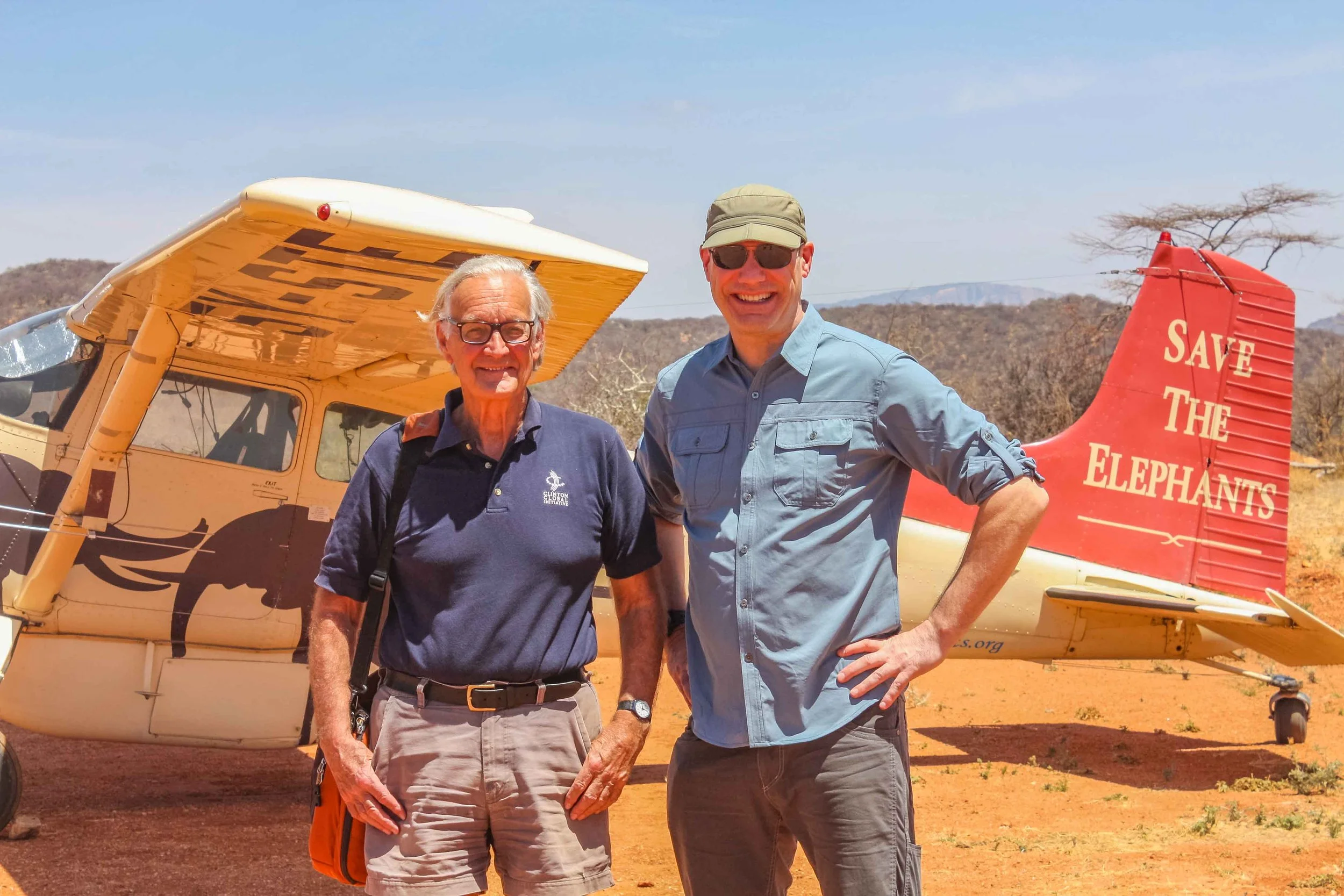
Iain and I in front of the Save The Elephants Cessna in Samburu Reserve, Kenya
I met Iain late in his pioneering career. This excerpt from an October 1966 New Yorker article written by the famous author, Allen Moorehead, gives an impression of who Iain was, even as a brash young scientist who had yet to earn his Phd:
“I thought I knew elephants fairly well before this trip, but at Manyara Mr. Iain Douglas-Hamilton was able to show me a good deal more. He is a young Oxford zoologist who is making a study of the elephants in the park… his method of doing this is to live with them day by day, and to approach them so closely that he can identify every animal not only by its tusks and its shape but also by its moods and idiosyncrasies. He declares—and one hopes he is right—that they are also beginning to recognize him. You need faith for this close-up work. On my first evening with Douglas-Hamilton, he surprised me very much by turning our Land-Rover off the track and driving straight into the middle of a herd of females and their young that were grazing in thick scrub. As he turned off the engine, he explained that these particular animals were old friends. It did not seem to me to be entirely so. A half-grown beast about ten yards away ceased its grazing and…went through the full repertoire of its intimidations in order to drive us away… “A dummy rush,” Douglas-Hamilton explained. I have no experience in estimating rushes, but this one seemed very real. When the animal, with its uplifted trunk, was some four yards away, I found I could look right down into its pink gullet, and its quivering tricorne lip was very hairy. And then, I am bound to admit, it stopped short. It uttered a piercing scream, wheeled about, and vanished into the bushes with its companions at its heels.”
Iain was just as energetic, full of ideas, and ready to try new things when I met him a full 48 years later in Kasane, Botswana, at the kick-off meeting of the Great Elephant Census in late January 2014.
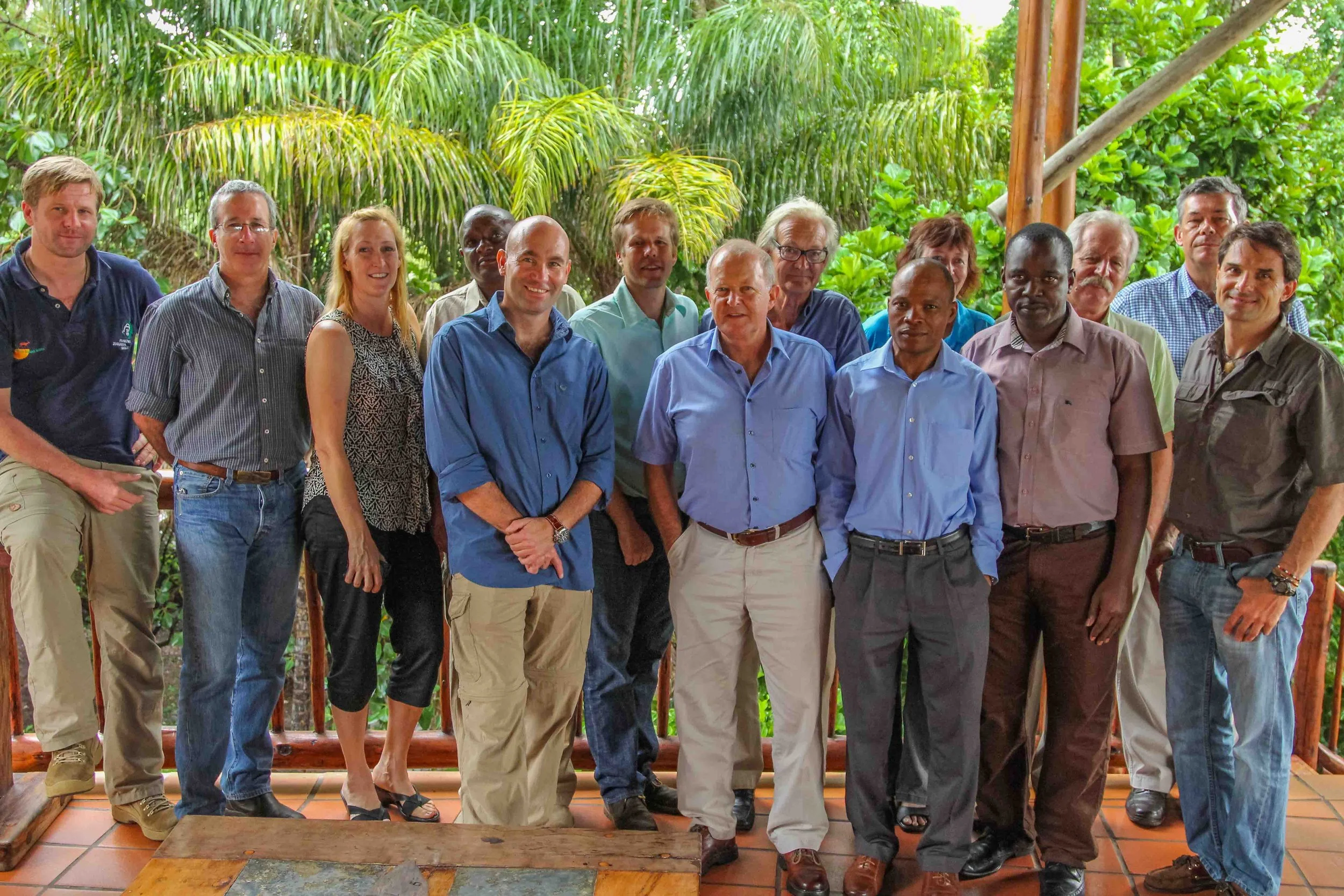
Cohort of scientists and aerial wildlife surveyors in Kasane, Botswana, January 2014
You can hear Iain elegantly explain in this video just why the Great Elephant Census was important. I remember Iain saying, “Information is power. If you have the information, then you have the power to move mountains.” And we did. The results of the Great Elephant Census were a key piece in ending the ivory crisis that occurred between 2009 and 2014, in which 30% of all African elephants were killed. The population in one park in Tanzania, the Selous Game Reserve, dropped from over 100,000 to just 17,000. Just one year after the Census results were published in 2016, China, the largest market for ivory, banned the ivory trade.
Without Iain, there would be no EarthRanger. He was innovating at an age when most people have long retired. Iain and the Save The Elephants team came to Vulcan to talk about the importance of animal tracking and the potential for technology to do so much more than it was. One of those team members, Jake Wall, then a PhD candidate, was using tracking data and Google Earth Engine to understand in new ways how elephants used their landscape. His work built on Iain's pioneering use of collars to track elephants and understand how they used the landscapes they lived in. As a result of that meeting and discussions with park managers across Africa, led directly to the development of EarthRanger, a tool that was built on Jake’s work to understand and protect elephants and other wildlife. EarthRanger has revolutionized how parks are managed globally, with nearly 1,000 parks using it across nearly 90 countries. You can read a tribute to Iain from the EarthRanger team. Ten years on, Jake is now the leader of EcoScope, a free open-source data analytics and reporting platform that is part of the EarthRanger family of products, designed to turn conservation data into action. EarthRanger, EcoScope, and so many other innovations are a direct outgrowth of Iain’s 50-plus years of work…and they represent only a fraction of his impact. It is no exaggeration to say that Iain directly inspired and informed the work of hundreds, if not thousands, of us working to protect wildlife.
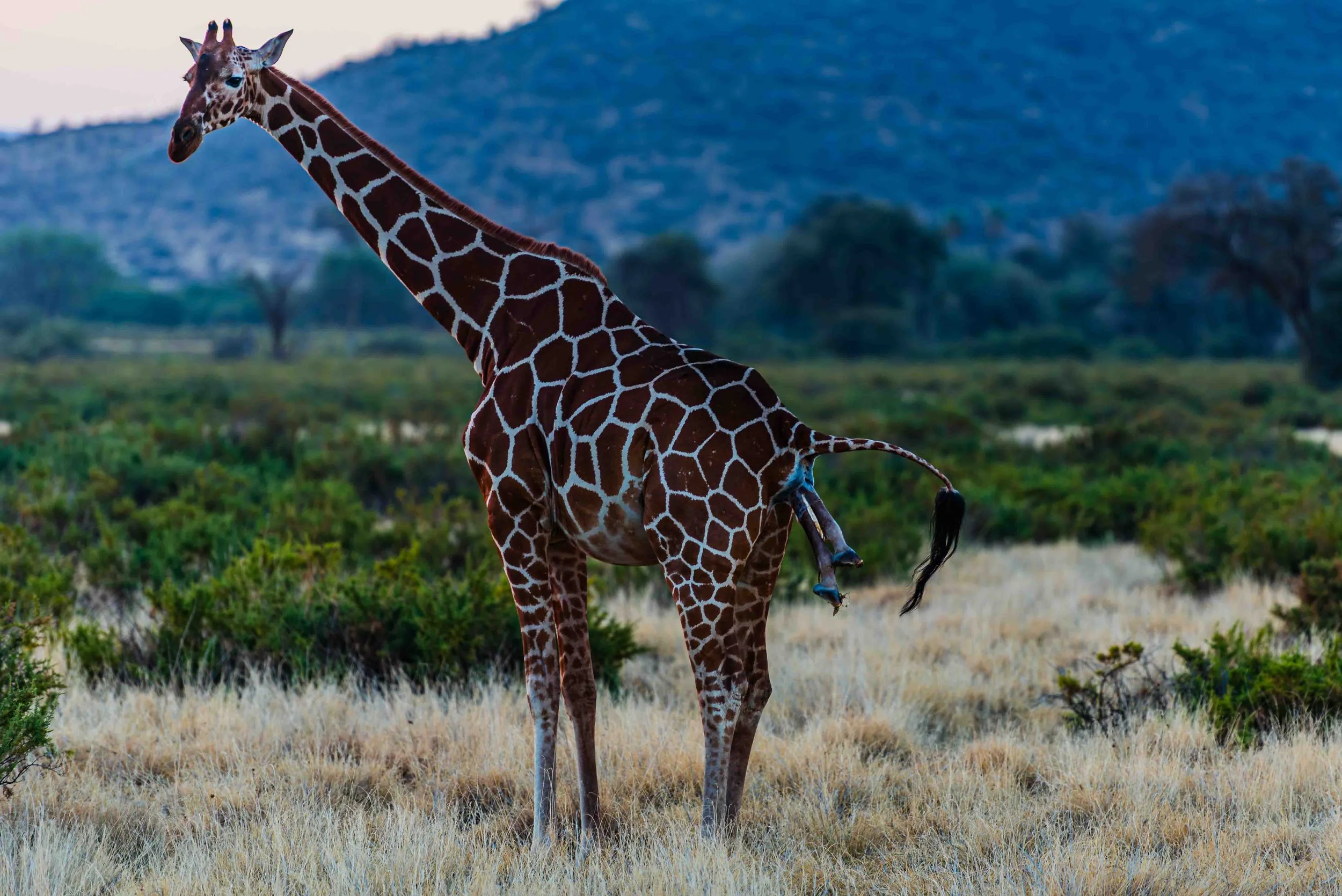
A giraffe giving birth in Samburu Reserve, Kenya, August 2016
I have so many memories of Iain that I will always cherish. I can imagine him now flying his beloved airplane using the Save The Elephants app as his compass to the nearest elephant and shouting out sightings to me, Jake, and Chris Jones, each with our assignments. And I was doing my best to take photos while he spun a tight circle, so we didn’t miss anything.
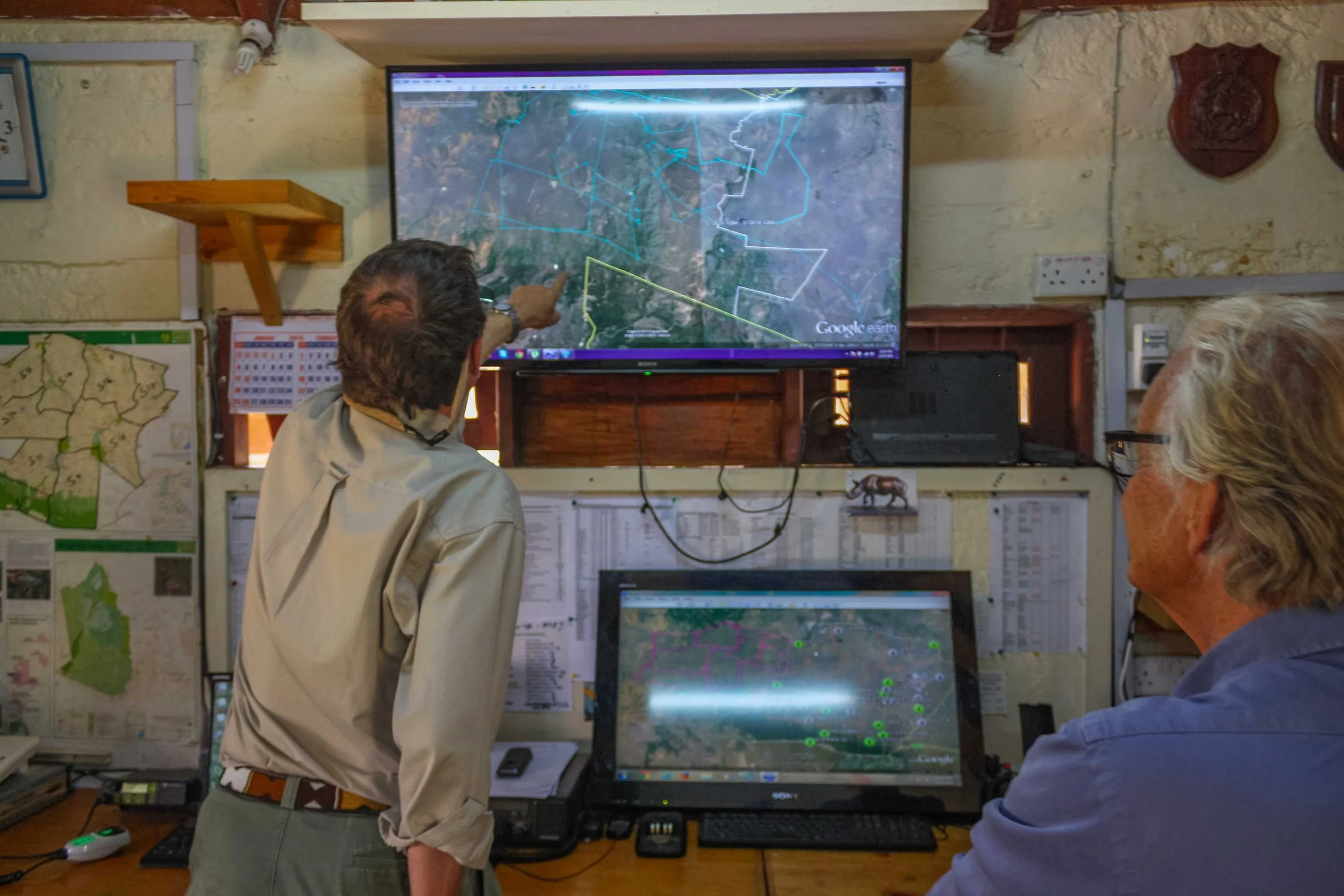
Iain looking on as Chris Thouless of Save The Elephants describes the potential meaning of elephant tracks in the precursor to EarthRanger at Lewa Conservancy in Kenya, February 2015
Iain’s passion was infectious. You could not meet him and not feel driven to do all you could and more than you thought possible to protect wildlife. He told many people about the time an elephant he knew well chased him round a tree and could have driven its tusk through him, but it walked away instead. He had many such stories, each reinforcing his wonder of other species. Once, when he and I were out in Samburu doing I don't remember what, we watched a giraffe giving birth. With the joy of a child, he told me, "I've never seen this before". It was a moment that captured everything for me about who Iain was, ever curious, ever learning, ever sharing, and ever loving the wonder of the other species we share the planet with.
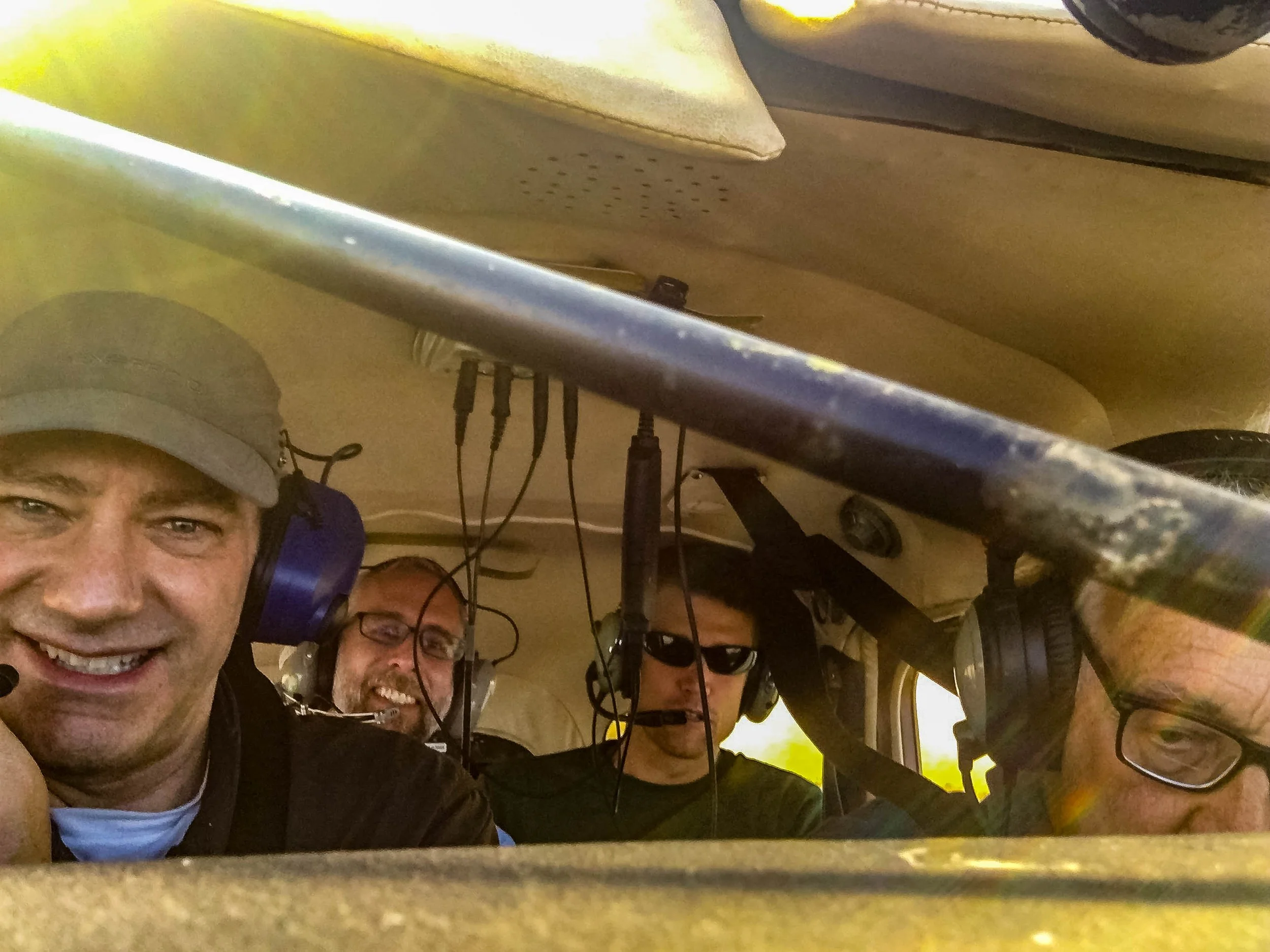
Flying with Iain, Jake Wall, and Chris Jones to spot elephants using the Save The Elephants app, February 2016
You will be missed, Iain, but you will not be forgotten. Your legacy lives on in each of us touched by your science, your innovations, your passion, and your belief, from those early days in Tanzania in the 1960s through to the 2020s in Kenya, across Africa, and beyond that, anything, however difficult, is possible if we keep at it.
I encourage you to support Save The Elephants to see that the future Iain secured for elephants is sustained far into the future.